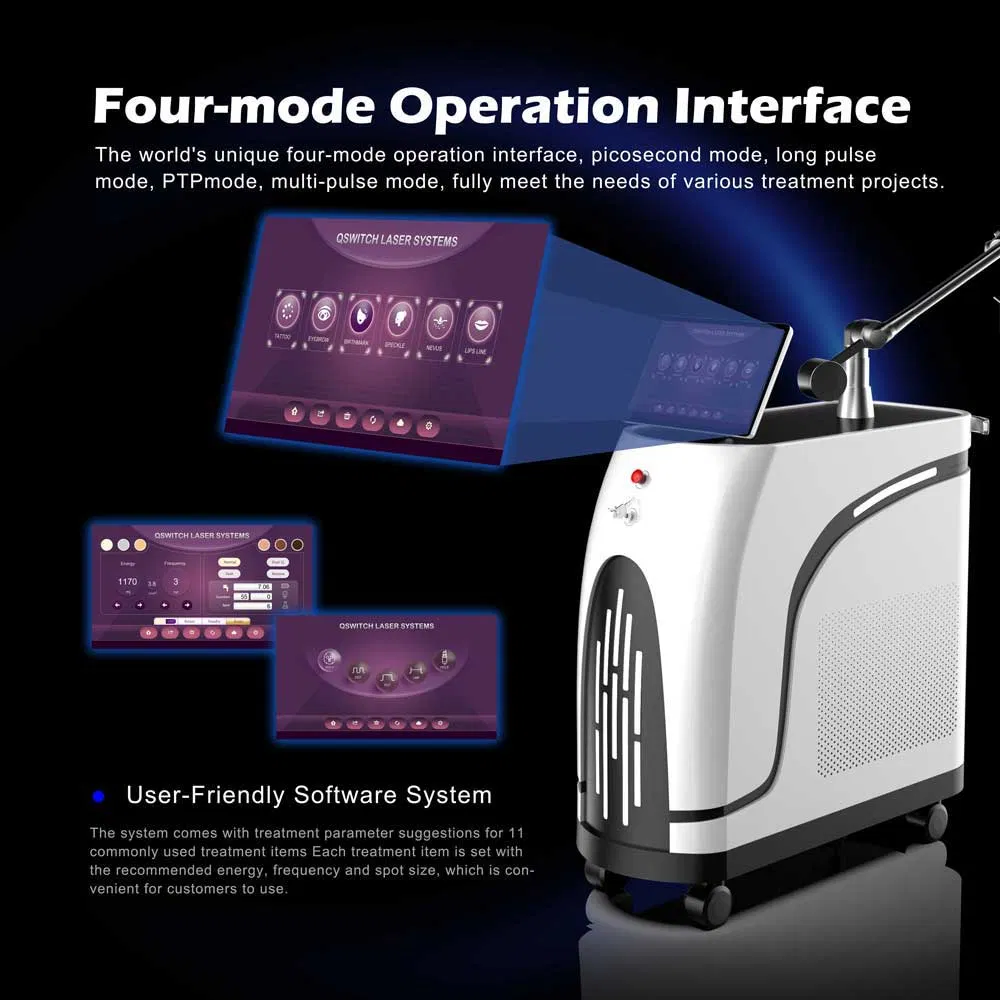
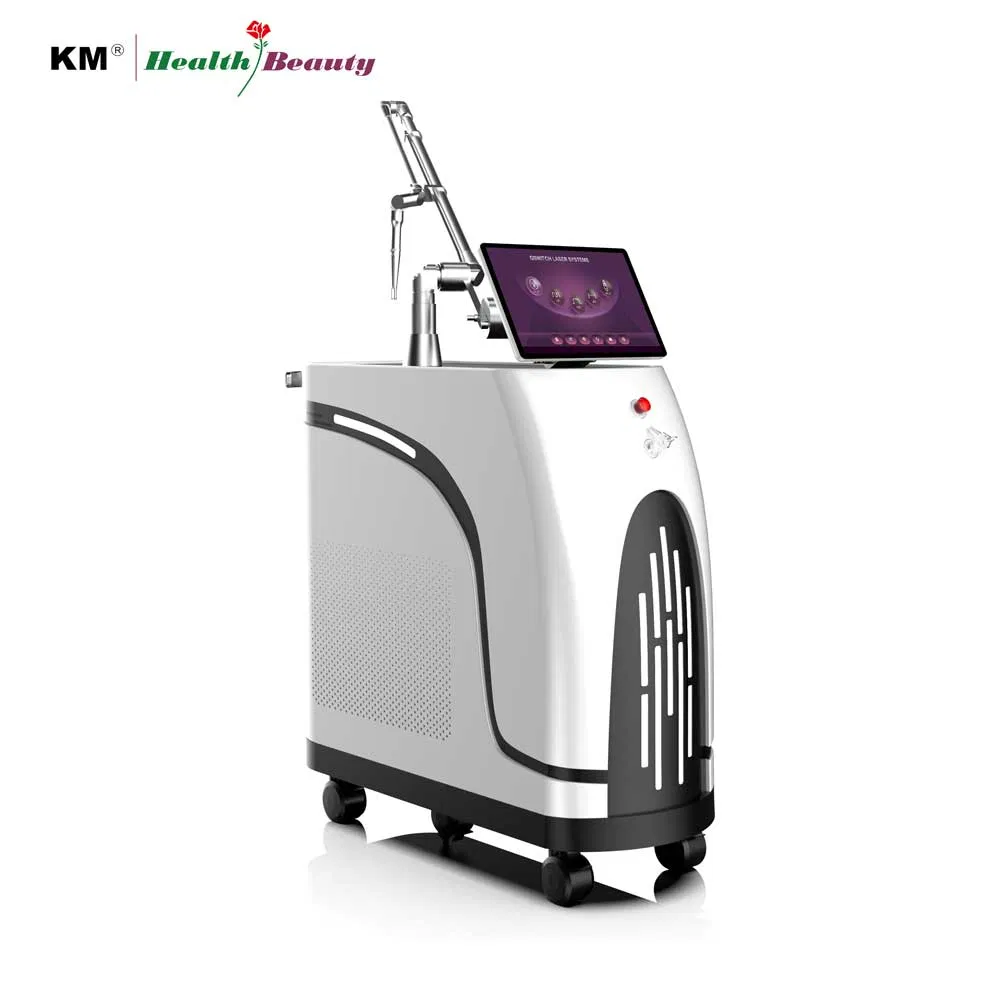
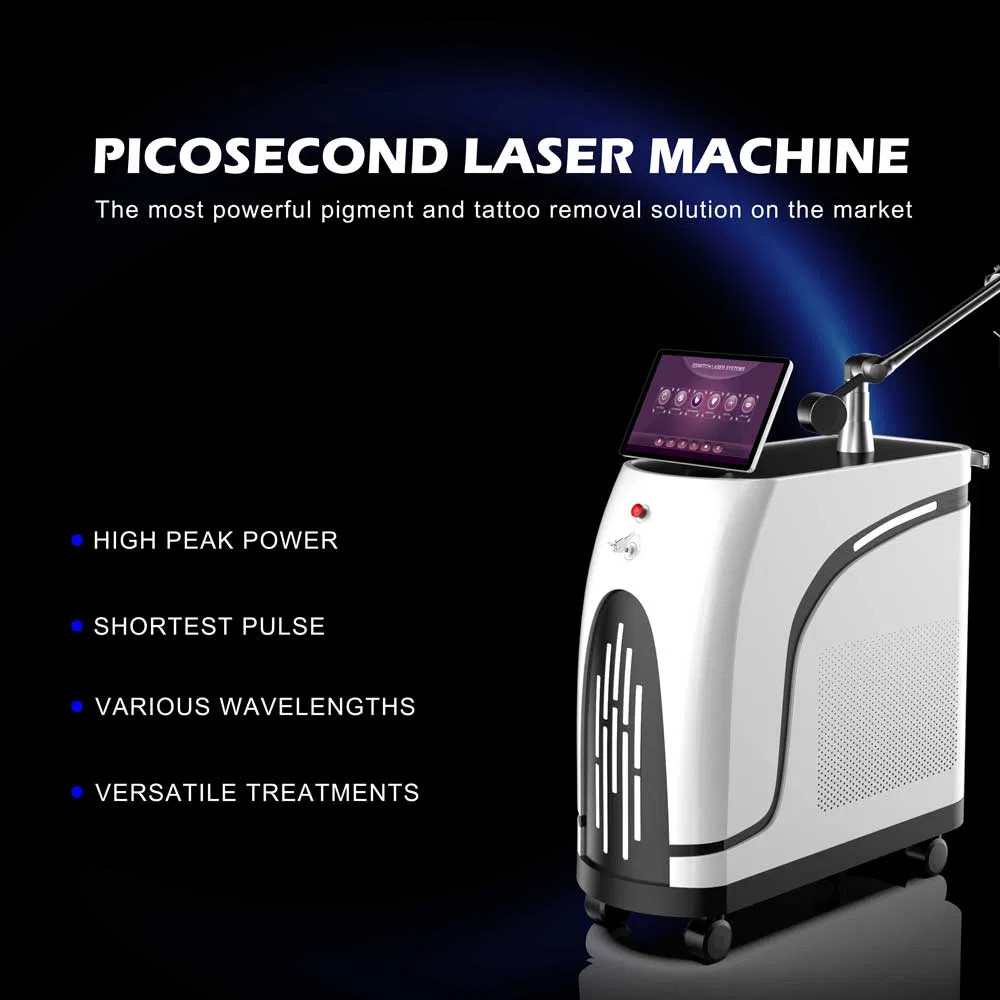
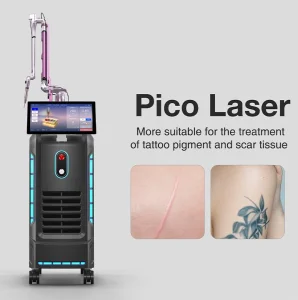
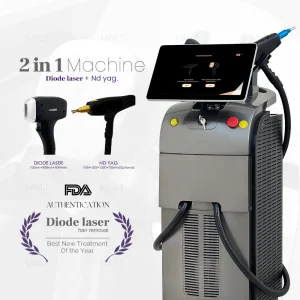
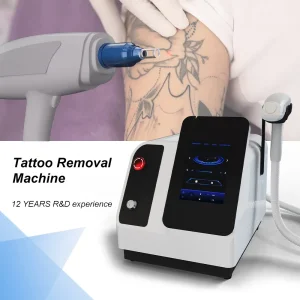
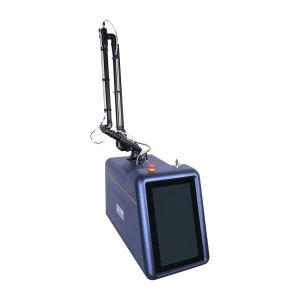
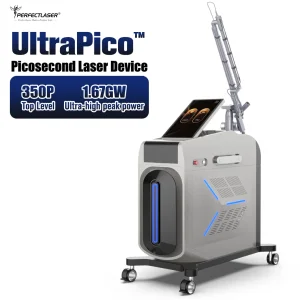
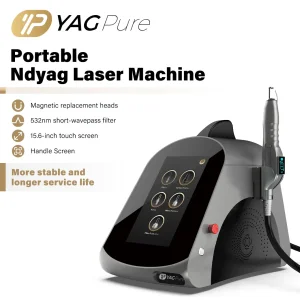
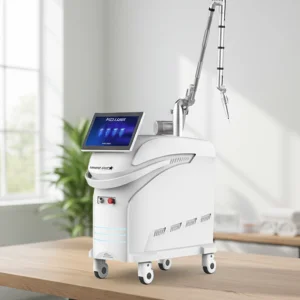
Picosecond lasers removal pigments by emitting laser beams in shorter picosecond pulses.
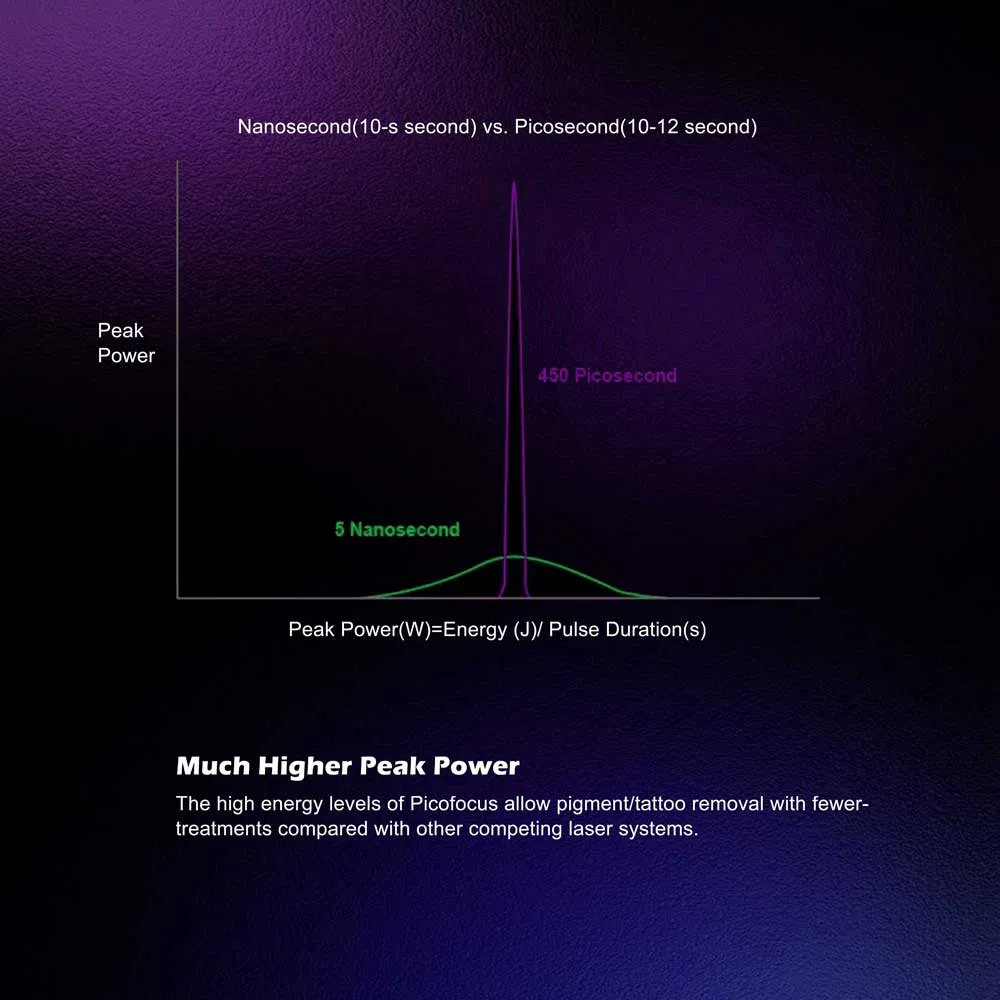
This means that there is less time for surrounding tissue to be damaged by heat from each laser beam. Compared to the older nano-second lasers, Picosecond laser is able to deliver higher energy laser beams to shatter these pigments more effectively.
Fewer laser treatment sessions needed when using picosecond laser.
Picosecond Laser are able to treat stubborn and challenging cases that Q-switch Lasers cannot.
It is an improved technology from traditional Q-switched Laser, which fire laser beams in the picosecond (trillionth of a second) duration.
Picosecond laser treatment are approximately 10 times faster than nanosecond Q-switched lasers.
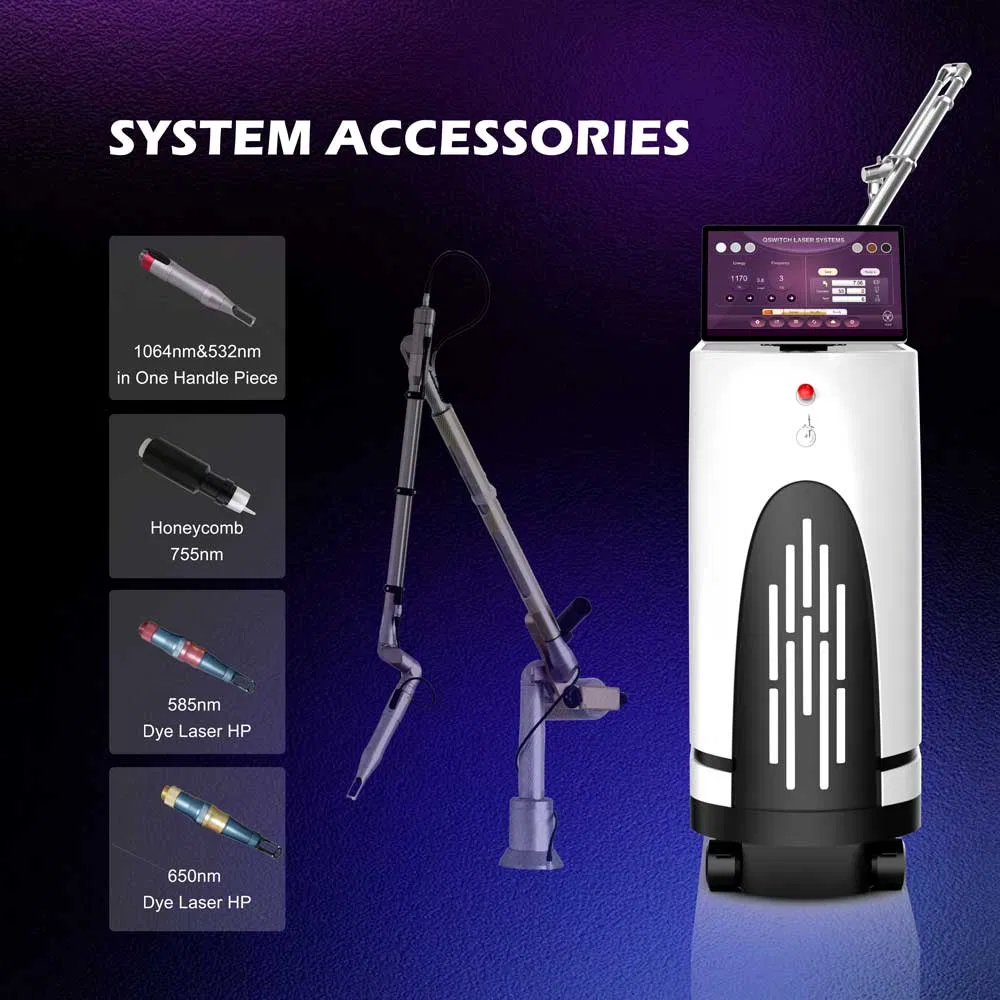
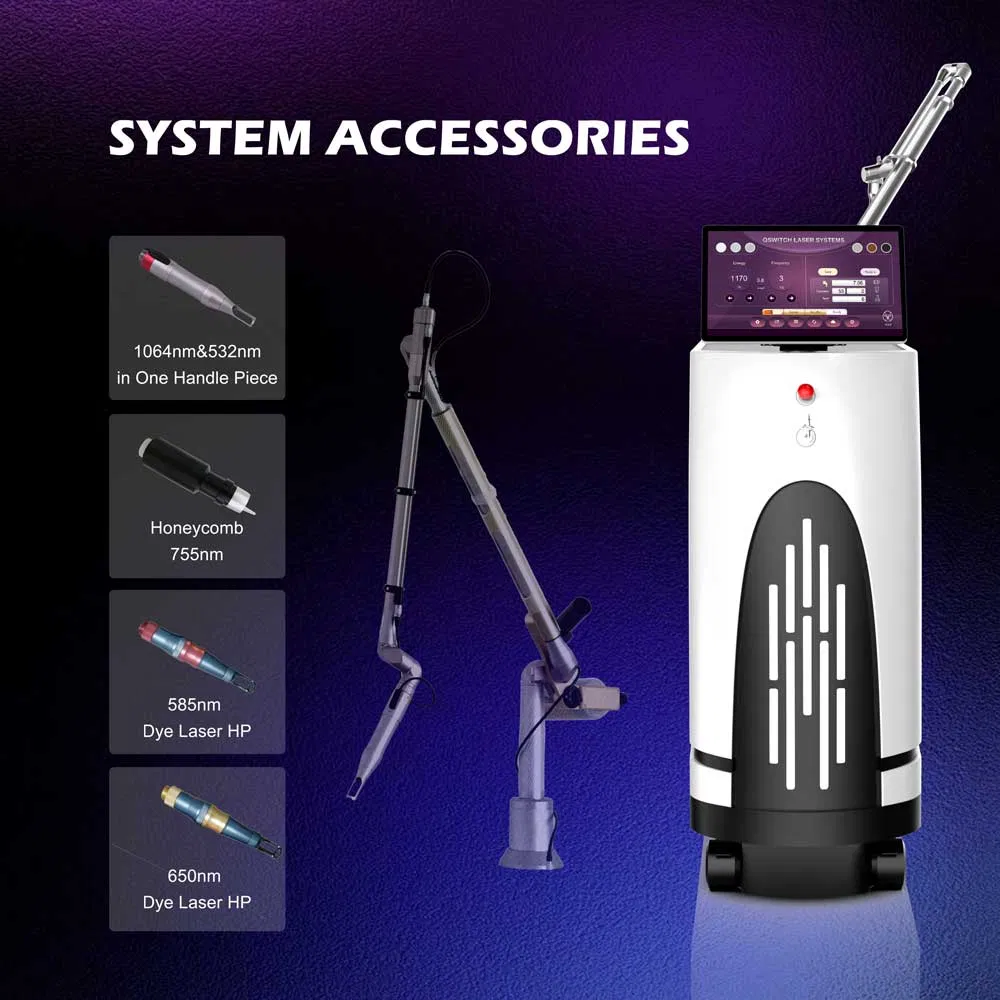
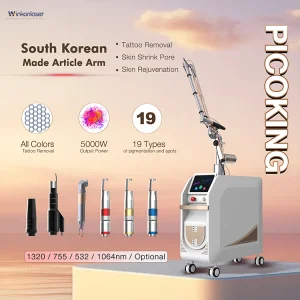
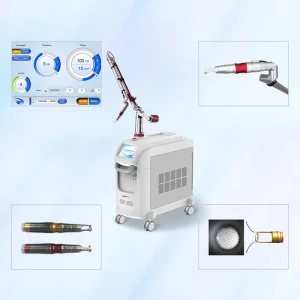
755nm HoneyComb Probe For pigmentremoval,face speckle removal.Professional for pigmentremoval,facespeckle spot removal.
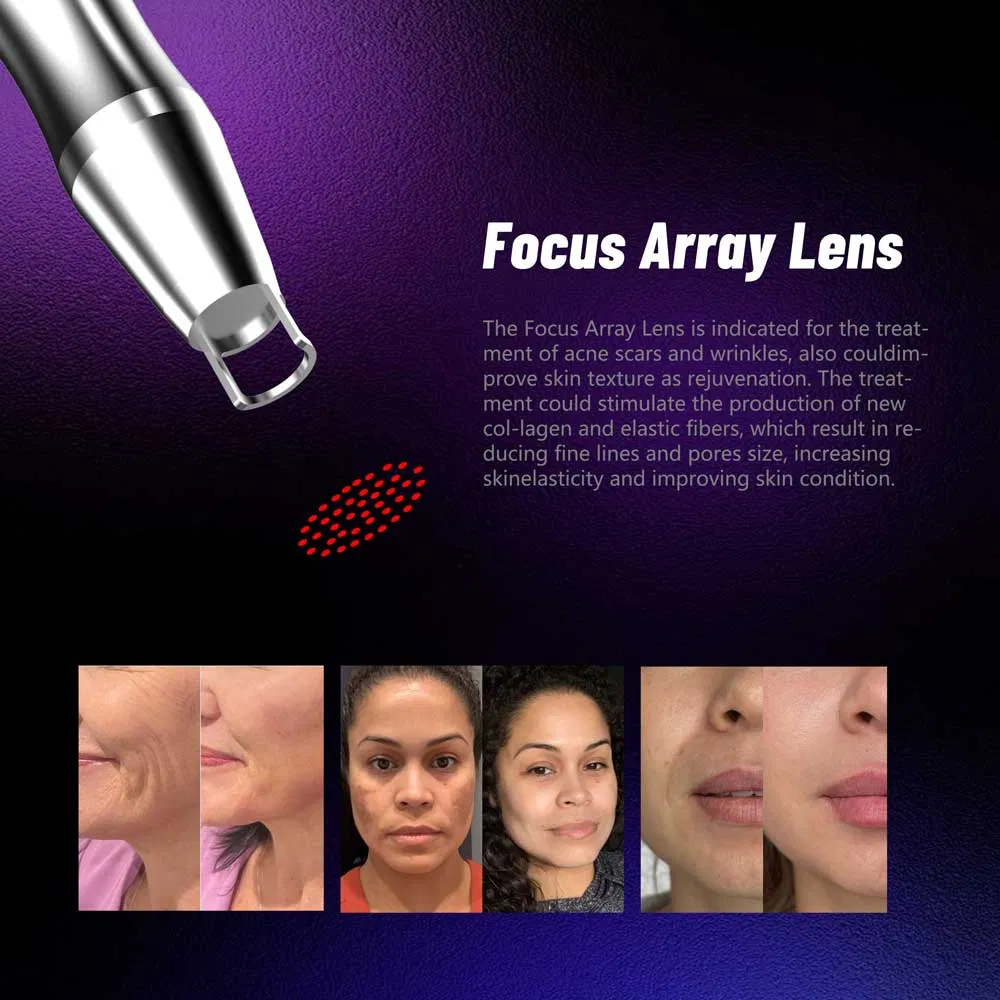
3-5 cycles Perfect Picosecond technology brings you delicateand smooth skin, with charming radiancefrom the inside out.
3 wavelength therapy- Different wavelengths treat different symptoms:
532nm- For pigmentation, light pigmentation ,red , coffee, brown , tattoos,birthmarks.
755nm- Honeycomb design for pigmented lesions.
1064nm- For all spots and black, blue,andgreen tattoos.
Technical Parameters & Indicators
(I) Working Conditions:
1. Ambient temperature: 10 ~ 30℃
2. Relative humidity: ≤75%
3. Atmospheric pressure: 860 ~ 1060hpa
4. Power source: AC220V±10%, 50Hz±2%
5. Cooling water: Deionized water, pure distilled water, or lowest standard purified water.
8. Single pulse max output energy: 1064nm (0.1~2.0j); 755nm (0.05~1.0j); 532nm (0.05~1.0j)
Treatment Principle
The Picosecond laser uses ultra-short pulses (one trillionth of a second in length) to hit the melanin with great pressure. The melanin shatters into tiny dust-like particles. Because the particles are so small, they are more readily absorbed and eliminated by the body. This significantly reduces postoperative swelling and melanin precipitate phenomenon.
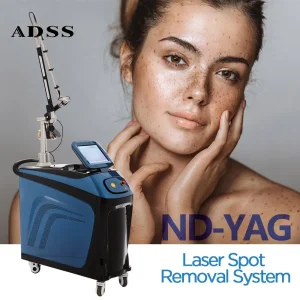
Laser spot removal is based on the selective photothermal effect theory to use its powerful instantaneous power. The spots are directly vaporized, broken, and then discharged through the lymphatic tissue, without affecting the surrounding normal tissue. Generally speaking, it will not rebound, but laser freckle treatment has a certain selectivity.
Laser freckle removal can produce different wavelengths of laser light, targeted mainly at black and brown pigment. The combination of light and pigment decomposes the coloration; as the pigment is gradually absorbed by the body, the color of the spot fades. The whole operation only needs tens of minutes, with no bleeding, and no invasive surgery, offering noticeable results after operation.
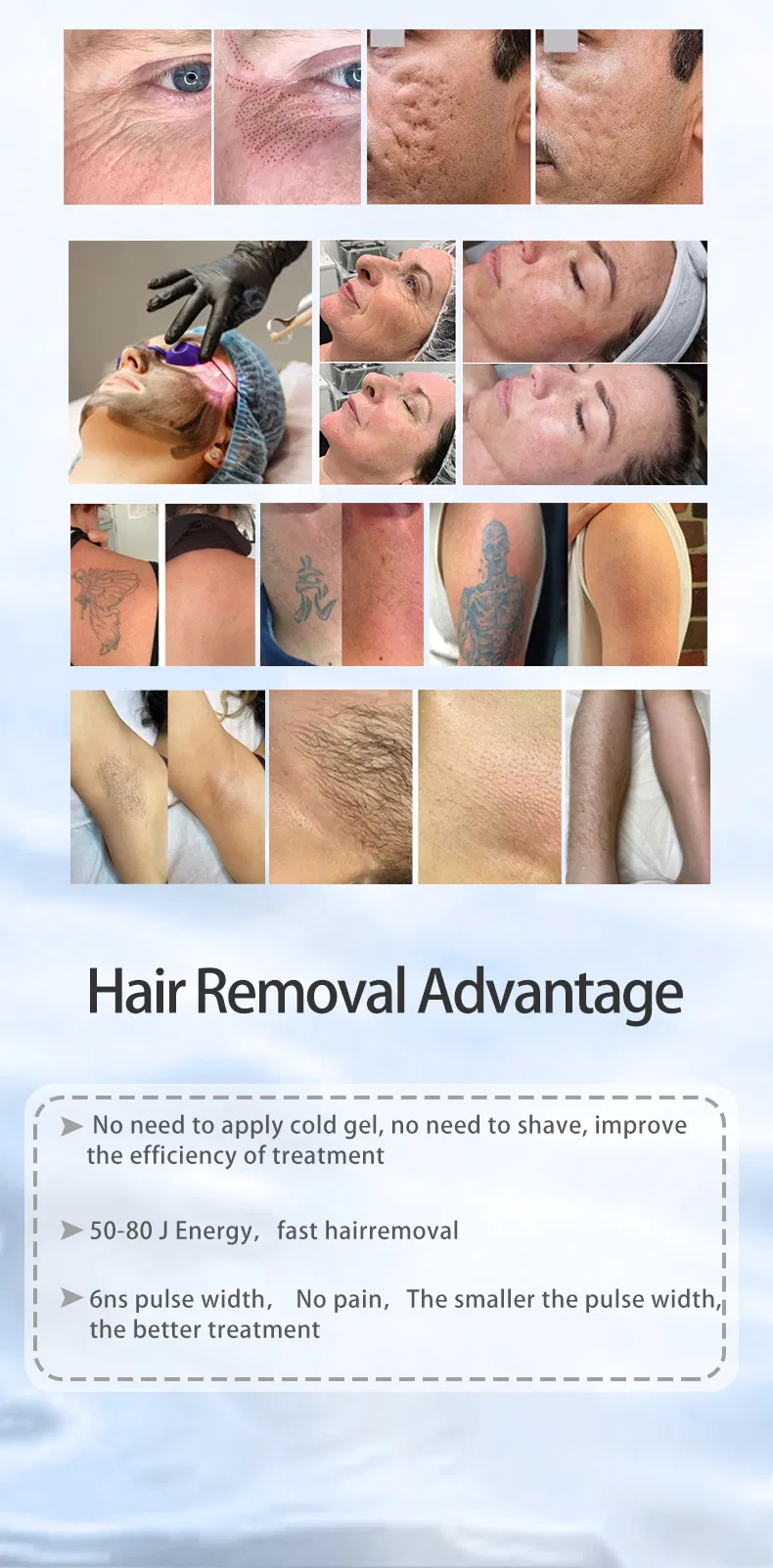
In general, freckles, zygomatic moles, liver spots, ota mother spots, age spots, and sun spots can be treated effectively with laser. Tattoos and eyebrows can also be eliminated by laser.
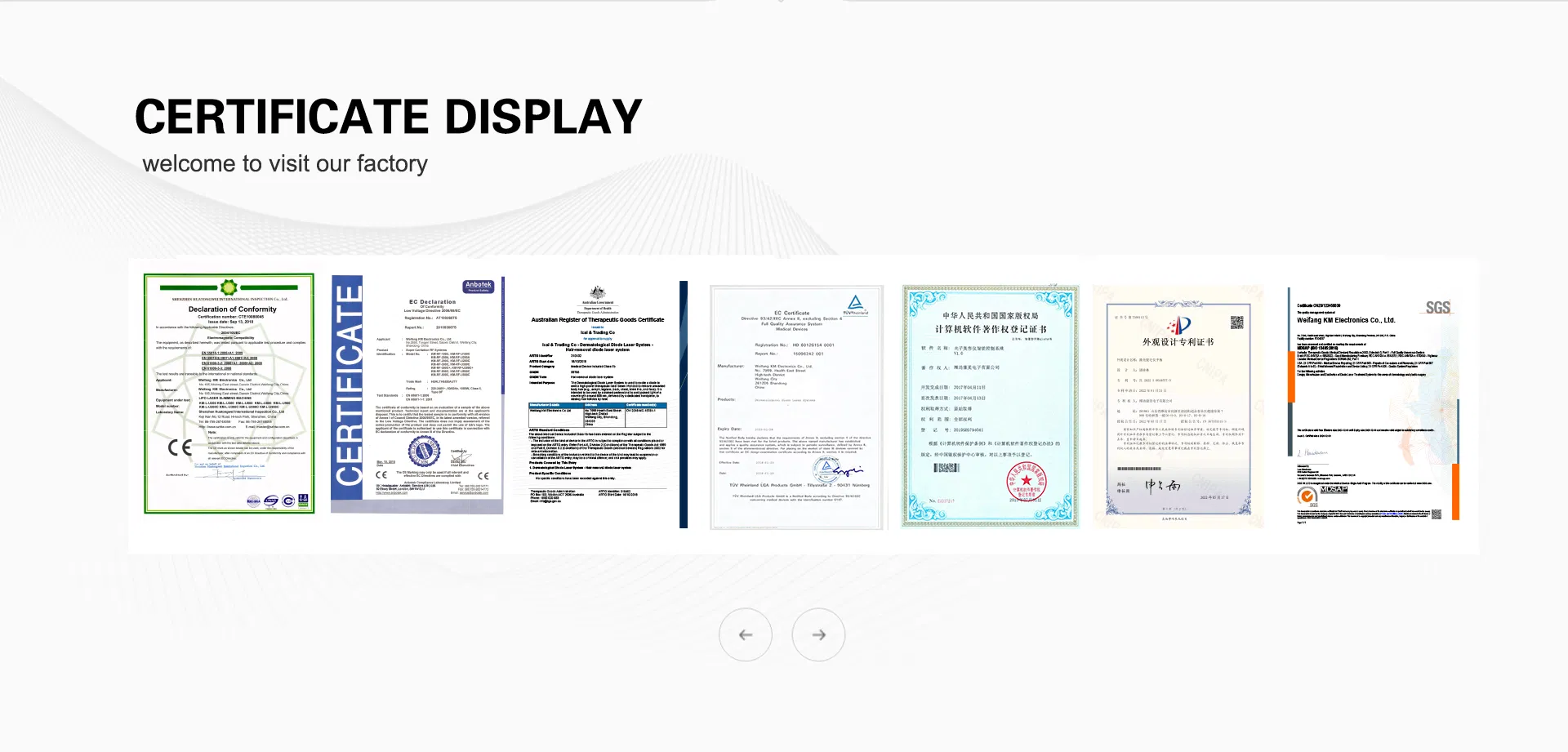
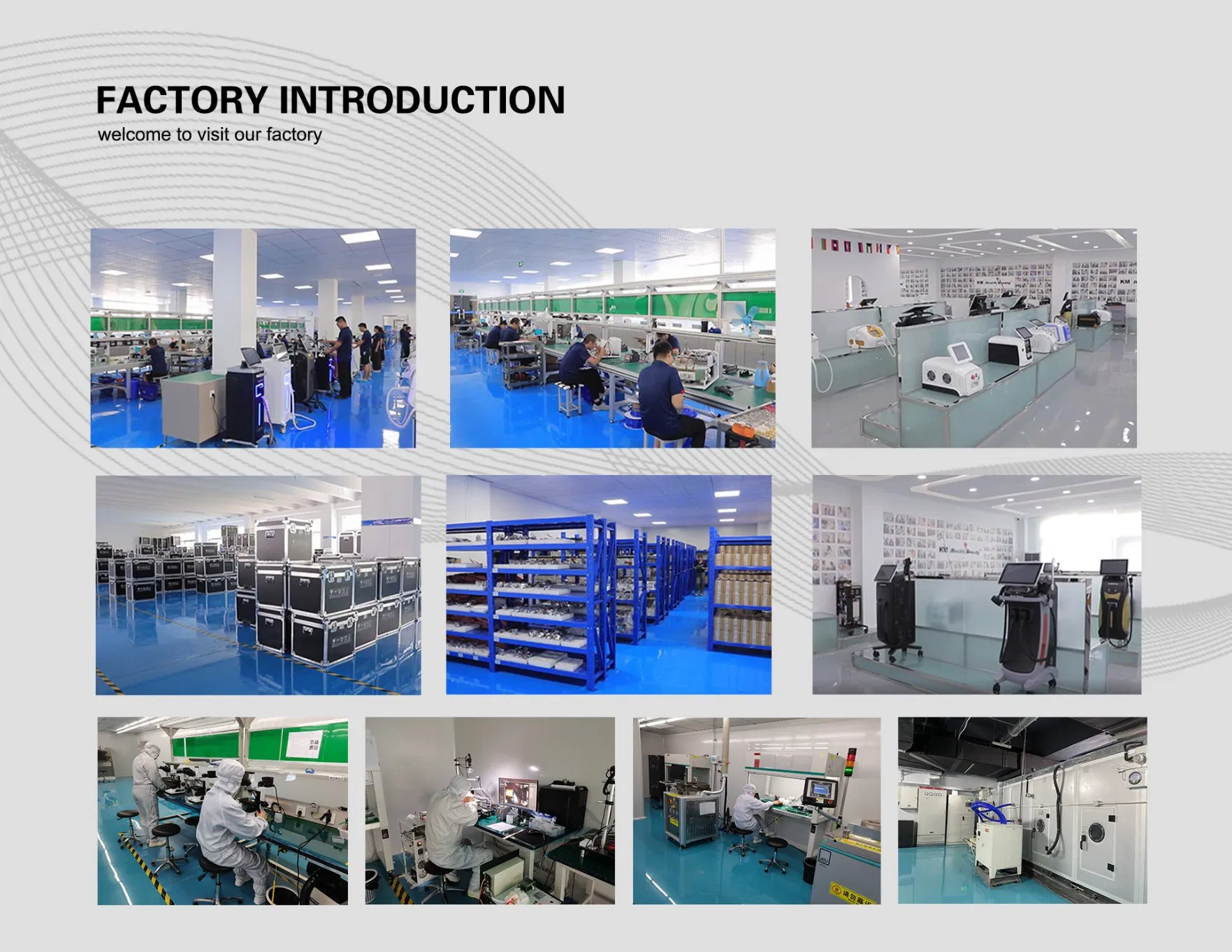
Production & Quality Showcase
Frequently Asked Questions
Q1: How does the Picosecond Laser work to remove tattoos and pigment?
The Picosecond laser uses ultra-short pulses (one trillionth of a second in duration) to hit the targeted melanin with immense pressure. This causes the melanin to shatter into tiny, dust-like particles that are easily absorbed and eliminated by the body's natural lymphatic system.
Q2: What are the benefits of Picosecond lasers compared to older Q-switched lasers?
Picosecond lasers are approximately 10 times faster than nanosecond Q-switched lasers. They require fewer treatment sessions, deliver higher energy more effectively, and can treat stubborn or challenging pigment cases that Q-switch lasers cannot.
Q3: What are the roles of the three different wavelengths (532nm, 755nm, and 1064nm)?
Each wavelength targets specific symptoms: 532nm is designed for light pigmentation, red, coffee, and brown tattoos; 755nm utilizes a honeycomb design specifically for pigmented lesions and face speckles; 1064nm is optimized for all dark spots and black, blue, or green tattoos.
Q4: Does laser freckle/spot removal leave scars or cause bleeding?
No. The process is based on the theory of selective photothermal action. The laser targets only the pigment spots, vaporizing and breaking them down without affecting or damaging the surrounding normal skin tissue. The procedure typically requires no incisions and causes no bleeding.
Q5: What are the necessary operating and cooling conditions for the machine?
The machine should operate in an ambient temperature of 10 ~ 30℃ with a relative humidity of ≤75%. It requires clean deionized water, pure distilled water, or high-standard purified water for its water-cooling system to ensure safe operation.
Q6: How many sessions are generally needed for skin revitalization?
Typically, 3 to 5 cycles of treatment using the specialized Picosecond technology are recommended to achieve delicate, smooth, and radiant skin from the inside out.
 OneSe Beauty